

How to Make Data Centers More Sustainable – Tips and Best Practices
Liquid Cooling

Data centers consume significant amounts of electrical power. Their outsized carbon footprints make it challenging for a data center to be sustainable, in terms of the environment and resource consumption. They also use a great deal of water. Data center equipment typically turns into e-waste, which further undermines sustainability.
This article explores how to make data centers more sustainable, along with best practices to follow to achieve sustainability.
Jump-to Section
What is a Sustainable Data Center?
The Importance of Sustainability in Data Centers
5. Waste Heat Recovery and Water Recycling
8. Manage IT Assets Efficiently
Incorporating 6 Data Center Energy Efficiency Best Practices
1. Create a Culture of Sustainability
2. Assess the Feasibility of a Greener Data Center
3. Let Industry Standards Guide You
4. Develop and Monitor Energy Efficiency Metrics
5. Encourage Data Center Sustainability Automation
6. Never Stop Looking for Ways to Improve
Build an Energy-Efficient Data Center with the Help of Park Place Technologies
What is a Sustainable Data Center?
A sustainable data center is a data center designed to operate in an environmentally and resource-efficient manner. It can be achieved through many sustainable data center solutions, such as utilizing renewable energy or advanced cooling methods.
A green data center aims to reduce the environmental impact of its everyday operations.
The Importance of Sustainability in Data Centers
The impact that data centers have on the environment is often scrutinized because they consume more energy for their size, compared to virtually any other kind of building. While data centers comprise less than .01% of the world’s built space, they consume between 1% – 2% of all the energy produced worldwide—a figure that is projected to increase over time due to increased use of artificial intelligence (AI) and other digital trends.
Data centers require massive amounts of electricity for two reasons: 1) to power the hardware they operate, and 2) to cool down that hardware, typically with air conditioning. This level of energy consumption is not sustainable if the industry relies on fossil fuels without incorporating renewable energy sources.
The cooling process also needs a lot of water, as much as 550,000 gallons per day (more than 200 million gallons annually) for a hyperscale data center. This is not sustainable for many local areas that house data centers. And, the heat created by the data center, which vents into the surrounding area, can create an unsustainable “microclimate” and contribute to climate change.
Additionally, data centers are a major contributor of electronic waste (e-waste), which refers to electronic hardware such as computer servers being dumped into landfills rather than recycled. E-waste goes against sustainability principles in two ways: 1) Discarding electronics means throwing out valuable materials whose mining and production are environmentally impactful; 2) Improper e-waste disposal leaks toxic materials such as mercury and cadmium into the environment.
Sustainability processes in data centers are vital, to minimize the environmental damage caused by the above.
3 Green Data Center Examples
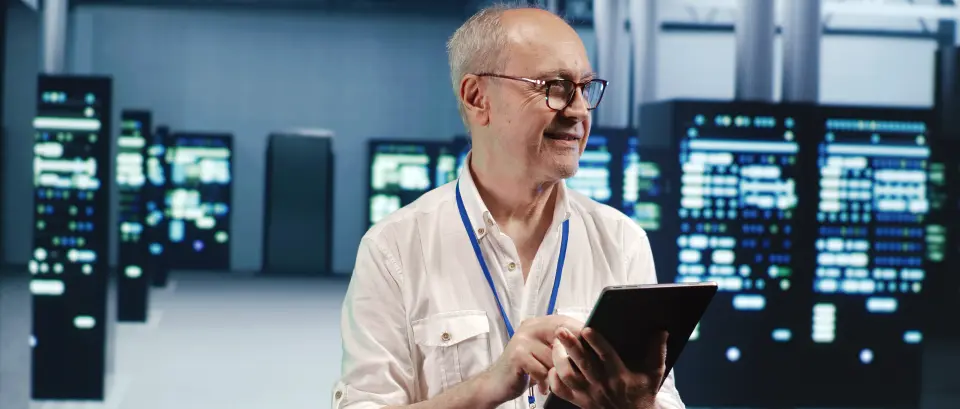
The industry is working hard on making data centers more sustainable. Some of the biggest names in tech are doing their part with data center green initiatives. Facebook’s Lulea, Sweden, data center is powered by hydro and wind power. Microsoft’s Cheyenne, Wyoming, data center runs its servers from electricity generated by a 237 MW wind farm. Apple runs its Maiden Data Center in North Carolina entirely with renewable energy.
Data Centre Magazine recently published its list of the top 10 sustainable data centers. Here are three green data center examples that are worthy of attention:
- Ark Data Centres—Uses solar panels on data center roofs, while also switching from diesel fuel to hydrotreated vegetable oil (HVO) to cut carbon emissions and reduce particulate pollution.
- EcoDataCenter—Powers itself from 100% renewable sources (75% hydropower and 25% wind).
- atNorth—Leverages circular and bio-based operations for waste streams, with recycling of excess heat for use in large-scale greenhouses and heating for local communities.
8 Green Data Center Solutions
Making a data center green is not a simple process and green data center initiatives may involve the use of many different tools, and concepts. Each data center sustainability solution is additive in its impact, so the more you use, the greener your data center is likely to be. Here are eight that contribute to making IT infrastructure and data centers more sustainable.
1. Renewable Energy
Renewables like solar, wind, and geothermal energy can cut your data center’s carbon footprint.
You don’t necessarily have to install alternative power equipment like wind turbines to get the benefits. Your power supplier could generate a portion of its power through renewables.
2. Free Cooling
In certain geographies, the climate and natural landscape offer built-in ways to cut energy costs. For example, situating a data center in a cold climate enables you to bring cold air in from outside to cool equipment.
Nature is your air conditioner, which saves on electricity usage. Waterways like rivers can play the same role if they are convenient. This is done by drawing cold water from the waterway through to the data center by intake pipes and delivering it to a heat-exchange system. From there, the cold water is used to cool the metal plates (e.g. CPUs) in hardware, before then being discharged again externally.
Both examples offer energy savings and a smaller carbon footprint from no extra technology used, and lower operating costs.
3. Liquid Cooling
Air cooling tends to be inefficient, especially for high-performance workloads in dense server environments.
Using techniques like liquid immersion cooling, which places hardware in chilled non-conducting liquids, can cool equipment with less energy consumption than is required for air conditioning. This is due to better heat transfer in liquids vs. air cooling.
Direct-to-chip cooling is a variant of this technique that is suitable for certain workloads and cools CPUs and GPUs, rather than the entire device.
4. ITAD
IT Asset Disposition (ITAD) enables you to cut e-waste. ITAD processes vary, but generally ensure responsible and environmentally friendly disposal of equipment at the end of its life.
ITAD includes security measures like wiping devices of sensitive data, followed by either refurbishing equipment for reuse or environmentally sound recycling and disposal.
5. Waste Heat Recovery and Water Recycling
A data center can be the source of heat for other structures, such as nearby office buildings, using heat distribution pipes. By helping such structures cut their energy consumption, the data center is contributing to sustainability at the level of its local community.
Making this work might also involve methods like cogeneration, which uses data center heat to generate electricity; or thermal energy storage, which stores heat for later use.
6. Server Virtualization
Using virtual machines (VMs) makes it possible to run computing and storage workloads on fewer physical machines—reducing energy use in the process. This is not a new technique, but the drive for sustainability should encourage IT operators to find new ways to expand data center virtualization.
7. PUE Reduction
An energy-efficient data center is on its way to being a sustainable data center. The more you can do to reduce your data center’s Power Usage Effectiveness (PUE), the better you will do.
PUE is one of the most important data center energy-efficiency measures. It’s the ratio between the power used to operate the data center’s computing equipment and the power needed for other uses, such as lighting and offices.
The PUE will always be over 1, because there are going to be non-computer uses of electricity in a data center. However, it is possible to reduce PUE significantly. In 2007, the average data center PUE was 2.5, meaning that for every watt used to power a server, 1.5 watts were used for other building uses, such as keeping the lights on. Today, PUEs are in the 1.55 range, which is much more sustainable.
8. Manage IT Assets Efficiently
Every data center will contain a large amount of IT assets, and disposing the equipment can lead to a lot of waste. But what if hardware didn’t need to be disposed of so regularly?
Services, such as data center hardware maintenance, ensure that data center equipment lasts well beyond its EOSL date. This means hardware lasts longer and there is less e-waste, leading to a more environmentally friendly IT infrastructure.
This step can even be extended to the procurement of IT hardware. Purchasing pre-owned data center equipment, rather than new hardware, keeps devices out of landfills and ensures no harmful chemicals can damage the environment.
Engaging with both of these, as part of an IT asset lifecycle management program, can considerably improve data center sustainability.
Incorporating 6 Data Center Energy Efficiency Best Practices
If you want to build a green data center or take steps to improve the sustainability of an existing data center, you can follow several emerging data center energy efficiency best practices. Location can affect the applicability of these practices, as regulations and standards are different in Europe than they are in the United States.
EU-based data centers must report on their energy efficiency under the EU’s Energy Efficiency Directive (EED). The EU also mandates the use of renewables and the reuse of waste heat in certain circumstances. American data centers face a more subjective situation. Although there are no specific American regulations requiring data centers to be sustainable, political realities, such as controversies over zoning and expanding electrical grids, exert a comparable effect on data center operators.
The basic set of best practices for a sustainable data center revolves around energy efficiency and the reduction of carbon-producing power generation. Your focus should be on improving energy use and cutting the carbon footprint and e-waste. From this foundation, you can adopt best practices that will take you closer to the sustainability goal.
1. Create a Culture of Sustainability
People are one of the most important elements of a sustainable data center. From data center planning and construction to ongoing operations, knowledgeable people can make a big difference in sustainability outcomes. It starts with training. You have to train your people to understand the importance of sustainability and its applicability to regulations and local political realities.
Ideally, you will be able to create a culture of sustainability in the organization. This means rewarding people for considering environmental impact in whatever they’re doing, whether it’s choosing an air conditioning maintenance contractor or selecting power suppliers. In some companies, a broader corporate sustainability program will help you with this process.
2. Assess the Feasibility of a Greener Data Center
Not every data center has the same potential for sustainability. Once a data center exists, it can be expensive to retrofit it, though you might be surprised at what you can achieve if a green data center is a priority.
The best practice is to conduct a feasibility study to determine the options for sustainability and evaluate the nature of the investment and whether it is worth pursuing. The process might involve steps like assessing the viability of integrating renewable energy sources or replacing air cooling with data center liquid cooling for selected workloads.
3. Let Industry Standards Guide You
A number of bodies, such as the International Standards Organization (ISO), have created standards that can help you with the mission of creating a sustainable data center. Some or all of the following can be useful in this regard:
- ISO 14001: Environmental Management System (EMS)—certifies that a data center employs environmental practices and is working on a reduction in its environmental footprint.
- ISO 50001: Energy Management System (EnMS)—demonstrates that the data center is committed to sustainable energy management.
- Greenhouse Gas (GHG) Protocol—provides benchmarks that enable data center operators to build a meaningful inventory of greenhouse gas emissions, e.g., CO2.
- BREEAM Standards/Framework—rates the energy/environmental performance of new data center buildouts and refurbishment, e.g., a BREEAM ”Excellent” is for data centers that meet the highest sustainability criteria.
- Carbon Trust Standard—proves a commitment to reducing carbon emissions.
4. Develop and Monitor Energy Efficiency Metrics
Measurement is critical to achieving sustainability success – How do you know if your data center is performing efficiently without reliable metrics? The answer is to develop a set of sustainability metrics and energy performance targets.
For example, if you set a target PUE of 1.4, you need to monitor your PUE and see how well you’re doing in accomplishing your goal. A number of tools will do this automatically, but you have to set them up. Other possible metrics to track include the percentage of renewable energy your data center is consuming, the amount of heat it’s generating, how much water it’s using, the volume of e-waste you’re recycling, and more.
5. Encourage Data Center Sustainability Automation
Some data center infrastructure management (DCIM) software packages have features to automate data center sustainability. These systems can monitor energy usage and forecast future energy needs. They can dynamically adapt workloads to optimize energy use and they might be able to automatically adjust power consumption and make recommendations for improving the PUE.
6. Never Stop Looking for Ways to Improve
The work of making your data center sustainable and more efficient should never end. Continuous improvement, or at least the continuous search for new and better ways to achieve green data center goals, should be the norm.
New technologies and services, like a range of data center cooling solutions, regularly become available, and these are proven ways to be more sustainable. More examples include DCIM tools that automate more sustainability processes, or power utilities to introduce renewable energy sources.
Build an Energy-Efficient Data Center with the Help of Park Place Technologies
It is integral for IT leaders and data center managers to incorporate green and energy-efficient solutions into IT infrastructures. As time passes and sustainability pressures mount from regulatory agencies, it will grow in importance.
Park Place Technologies can aid data centers in being more sustainable:
- Liquid cooling – Our direct-to-chip and immersion cooling solutions ensure your equipment is cooled with less electricity usage and at a fraction of the long-term cost vs air cooling.
- ITAD – Park Place’s IT asset disposition service ensures safe destruction of IT hardware, ensuring no harmful chemicals damage the environment.
- Third-party maintenance – We can extend the life of your data center hardware, which avoids untimely destruction and waste, all while keeping your costs down.
- Pre-owned hardware – Tired of costly IT equipment upgrades? Curvature provides re-furbished hardware at a fraction of the cost of new devices. This ensures the hardware is put to good use, rather than dumped in a landfill
Please contact us to learn more about how our services can make your data center greener.
Frequently Asked Questions:
-
How to make data centers more energy efficient?
To make data centers more energy-efficient, you can optimize with a combination of advanced cooling systems and integration of renewable energy. Liquid cooling and free-air cooling are some techniques that reduce energy-intensive air conditioning. Energy-efficient servers and virtualization ensure high utilization with lower idle power consumption of computing resources. Sourcing electricity from renewable sources like solar or wind can significantly reduce overall carbon emissions and improve PUE.