

The Savvy CIO: Episode 7 – “How is AI Revolutionizing the Way We Work?”
Podcasts
In this episode, host Bradd Busick sits down with colleague, IT leader, fellow podcast host – and longtime friend – Jason Elrod. Together, they don their (figurative) hard hats and descend into the crevasse of the IT skills gap.
Bradd and Jason answer deep questions – like, why AI can’t be layered onto a legacy mindset? Where’s the first place you should bring AI into your organization? Do we really have to rewrite entire roles, new hire job descriptions…and maybe even the very meaning of work?
Jason also sets the backdrop of the AI era’s unprecedented pace of change, shares how the purpose-driven origin of his podcast Drink Coffee, Do Cool Stuff has informed the way he thinks about work, and lays out the key difference between leadership by choice versus management by mandate. Bradd and Jason also plumb the depth of how CIOs, CISOs/CTOs, and boards need to be viewing AI through the lenses of strategy, risk, resilience, and fiduciary responsibility; why “AI inventories” are becoming obsolete as AI gets embedded into everything; and why addressing the modern skills gap might be less of a hiring issue, and more of a changing of the guard when it comes to team leadership – a problem that can’t be solved by merely working hard, but requires smarter thinking to shift teams from fear, to curiosity.



Listen to all episodes of The Savvy CIO here.
'How is AI Revolutionizing the Way We Work?' Transcript
Jason Elrod: Don’t try and take things like AI and put it on top of a legacy mindset. AI is not about creating more with less, making people work harder, make it cheaper. What that causes is to say, hey, it’s not, ” AI’s going to come take my job.” It’s, ” Let’s rewrite all job descriptions that include the AI component.” It completely shifts the work identity and the container in which we’re actually trying to provide value, which means we’re shifting the meaning of the value of work.
Bradd Busick: What’s up, everyone? You’re listening to The Savvy CIO podcast Modernize Wisely by Park Place Technologies. I’m your host, Bradd Busick, and this is a show where we talk about budget pressure, AI adoption, security, and the art of keeping the lights on without burning everything down, with the people who are tackling these problems every single day.
These days, keeping up with talent demands in IT feels a lot like whack- a- mole. A skill goes obsolete, so you hire to fill it. A tool changes, so you retrain. A gap opens up, so you patch it. It’s expensive, and just like a carnival, it feels like the odds are stacked against you. There’s no way you’re walking out with the prize from the top shelf, a team that runs smoothly and doesn’t leave you scrambling. Your instinct is to probably work harder, learn more tools, hire faster, and prove that your team can keep up. But is that what people who seem to be staying on top of the ever- widening skills gap are doing? Why do some people seem to be sweating less in the IT talent management marathon?
Jason Elrod is one of those people who, in spite of everything going on, is still looking cool as a cucumber, and I’m not just saying that because I’ve had the pleasure of seeing him in action on the front lines in one of the scariest verticals in the world, this little thing we call healthcare. Aside from being a nationally recognized CISO, he’s also a cybersecurity strategist, IT leader, and the host of his own leadership podcast, Drink Coffee. Do Cool Stuff. He’s the rare combination of a practitioner and strategist that I think this conversation needs, especially if you’re thinking about how your organization should be responding to AI. Jason Elrod, welcome to The Savvy CIO.
Jason Elrod: Thanks for having me. Great to be here.
Bradd Busick: I’m so excited about this conversation, not only because you and I have had an incredible history of serving together in healthcare, but because you are actually so unique in the industry. It’s not very often we get to find someone that’s bilingual, meaning you speak fluent business, you speak fluent technology, and I’ve seen you at the board level. I’ve also seen you on the front line. So to kick things off, let’s talk about you. Your expertise has been learned through the School of Hard Knocks. Was there a specific moment where you realized like, ” Man, this old playbook is not going to work, I need to adapt”?
Jason Elrod: So I have been in it to win it for a long time. I’ve had a chance to see several big changes in technology since then. To give folks a reference point for that, I wrote my first computer program in 1979. You see a lot of things coming in, like the internet age, the ITH, and now we have the AI age. Last year where it really hit me, I was having a conversation with some folks about all of the advancements that had been made in AI just in 2025. And when we were done with the conversation, it struck me that all of that change, all of that advancement, which was about what it would’ve taken 10 years to do before, had advanced in about 10 months. And for somebody who’s been in this a long time … I’m always in there, always learning, always doing … it kind of struck me like, wow, that is a big, big difference. The rate and impact of change now is just phenomenal.
Music: ( music)
Bradd Busick: So Jason, your podcast is called Drink Coffee. Do Cool Stuff. Tell me about the inspiration for that. Where did it come from? And how does it kind of gel with your own IT leadership role that you currently play at MultiCare, but you also play on a larger, more global stage?
Jason Elrod: It actually comes from a conversation I had with my late mom. And I’m paraphrasing a little bit, but I was complaining about something and she said, ” Well, what would you do if you didn’t have to do anything? What would you do if you didn’t have any requirements on you?” And the first thing that came to my mind at the moment was, ” Well, I’d probably drink coffee and do cool stuff with people of purpose, because I love the ability to learn and leverage and that idea of leaving a legacy in it.” So that was really where the name came from. And then when she passed away, I thought, what better way for me to actually start living that, and that’s when I started it.
And then the folks on there, you’ve been on there as a guest … a phenomenal episode, people, go check it out … it’s getting behind that. What is the purpose behind people who are high- level practitioners, top of their game, whatever that is? So how are they living through purpose? How does that apply to their identity in their career, or in their family or in their community, or in their health or in their own space?
Bradd Busick: I love that, and I loved getting some time with you on that podcast. Part of the upshot of The Savvy CIO is not just incredibly bright and talented IT leaders. That might be your what. What Jason’s talking about is your how. How do you show up? How do you have an impact on people’s lives? The things that you say and the words that come out of our mouth could literally be the difference between somebody having an awful day and an incredible day. And so as we start thinking about all these interesting capabilities that are coming at us as CIOs and IT leaders, the through line and the thing that I think stays consistent is how we treat people. What is our purpose? How do you have impact in people’s lives in addition to the jobs that we all do with our, quote unquote, fancy titles?
Jason Elrod: Yeah, I think it speaks to leadership. And I like to categorize it this way. Leadership is influence without mandate. Management is leading through mandate, so you have to do it. Now, you can be both a manager and have leadership, but you don’t have to have that title to be a leader.
Bradd Busick: That’s good.
Jason Elrod: And it’s everything you’ve just said. How are you showing up? How are you being a leader in your life and for those around you?
Bradd Busick: Jason, over the years, you and I’ve talked a lot about the importance of leadership and IT talent. And right now it actually feels like an incredible inflection point for IT, but actually it might just be the end of the beginning, meaning that everything that’s come before this moment in enterprise IT, whether we’re talking about cloud or digital transformation or, quote unquote, automation, those could have been the prequel, it seems. What makes right now different from every other this- changes- everything moment that we’ve all seen or that maybe you and I have already been through?
Jason Elrod: Yeah. You nailed the name of a keynote I gave about two months ago, ” Is it the end of the beginning or the beginning of the end?” And reality is this is the end of everything that led up to this new core component of how we have to look at work, how we have to look at value, how we have to look at society. It’s all set us up to saying, ” Hey, you know what? It used to be I could do business and then I had IT, then I had business and IT.” Then I could do business, IT and security, because you can’t do modern IT without modern security, so there you go. And so now you have AI on the scene, and it has now rapidly become ingrained. It is now a core building block, and so it totally shifts right now where we need to go, and that’s the sea change. It is the end of the beginning of what comes next.
So that means don’t try and take things like AI and put it on top of a legacy design, put it on a legacy mindset. AI is not about creating more with less, making people work harder, make it cheaper, make it less, whatever thing. It’s not the regular widget amplifier that in the past the folks have focused on. It’s not that. But what that causes is to say, ” Hey, it’s not AI’s going to come take my job.” It’s, ” Let’s rewrite all job descriptions that include the AI component.” Wipe the board and go, ” Okay, what is the CIO’s job with AI as a built- in component? What is the CISO’s job with the built- in? What is the individual contributor’s job with it built in?” So it completely shifts the work identity and the container in which we’re actually trying to provide value, which means we’re shifting the meaning of the value of work.
Bradd Busick: Yeah. That’s really well said, and I am thoughtful that the skills gap has maybe historically been first and foremost a, quote unquote, talent acquisition problem. It actually feels like, particularly in the example you just gave, with AI coming to the forefront, it almost becomes the foundation. We no longer have, ” Are you in IT or are you not?” In some cases, we’re all in IT. And I’m remembering times where I’ve had conversations with leaders who have said, ” We’re never going to have AI in our organization.” And in kind of that world of like, ” Hey, that’s not going to age well, hold my beer,” it actually feels like we do need to wipe the slate clean for every vertical, horizontal, diagonal. Everywhere that we’ve historically called an IT department, it almost feels like AI has become the through line now so that we can actually start to quantify value in a meaningful way.
Jason Elrod: It is that significant. It is now part of the DNA of everything we do. It’s a good example. People want to say, ” Give me an inventory of the AI in my organization, all the solutions, those things.” I also have the conversation, I say, ” That’s Sisyphean. That’s a dumb progress, actually. What you need to do is you need to have a checkbox that says, yeah, AI is a component of this, because AI is a capability that’s going to be part of everything.” So if you want to say, hey, three years from now, ” What is my AI inventory,” it’s everything. It’s everything, and you’re going to have various aspects of it.
So you don’t say, ” I’m building my directory of AI tools or apps that I have in here.” That’s a silly goal. What you have to do is you say, ” Okay, now I need to add a CI,” inside your CMDB, to use acronyms here, but you need to add a variable that says, ” Yeah, this is utilizing AI, and here’s some of the main components of it that it is.” So AI is a capability associated with everything going forward. It’s not necessarily going to be its own separate thing. And when you weave something into your reality that tightly, you have to treat it that way, under reality.
Bradd Busick: That’s really good. It’s almost a throwback to the internet. It’s like, ” Jason, which of these things has the internet?” I mean, it sounds so dumb to say it today. We’re at that moment now. Which of these things has AI? It’s fascinating. I do want to push on something you said earlier and curious to get your thought, because you have the benefit of working with CISOs. You’re on a ton of boards. You also get the benefit of working with CIOs and CTOs, top floor to shop floor, even CEOs and board members. How are each of these personas thinking about AI differently? What’s the CISO thinking about AI versus maybe what a CTO might be thinking, versus what a board member might be thinking?
Jason Elrod: Those are three good tranches. If they’re thinking about it clearly, they’re looking at it as a tool that’s amplifying, enhancing or augmenting what they already were doing in those areas. So if I look at the CTO and the CISO, often those are sort of, ” I want to make it secure. I want to make it confidential. I want to make it high integrity. I want to make sure it’s available,” which can seem counterintuitive to it needs to be available uptime fast over here on the CTO side, where you have an infrastructure bent. So those things don’t change really. So it’s how do we do that with this as a new component.
And so I think it’s mainly an education, part of that skills gap. How do we teach people what AI actually is and how does it apply to their role? So how does AI apply to organizational fiduciary responsibility, organizational enterprise risk, organizational strategy? What does that impact? Now we’re talking about the board- level concerns, like, ” Hey, this is on the scene. What does it do to our past goals? What should it do to our future goals?” And then ask that internally, to want to say, ” Hey, how is this making things more or less secure? How is it making them more or less resilient?”
Music: ( music)
Bradd Busick: I think for so many years, you have IT tucked under a CFO or a COO, which is so foolish today. You wouldn’t have the foundation of your building beyond sand. And so it now more than ever begs the question, at what point is the IT leader or the CIO going to become the right hand of the CEO or eventually just become the CEO? And I think with things like AI, you can’t do these things in a strategy committee anymore. That thinking is three years old. I think the modern organizations are bringing leaders like you in to say, ” Help us navigate this, because we don’t have the answer,” and I’m curious. In your world, you and I get a chance to see all these experts online. ” I’ve had 30 years of AI.” How are you helping coach your peers and leadership and boards that you’re a part of? How are you helping them navigate this world?
Jason Elrod: Two things. Number one, around governance, avoid governance theater. So documentation of what we have, documenting a policy, documenting stuff, documentation is not governance. It’s not. And in AI, it’s very, very important to have an operational governance model in place. Good governance says no more than it says yes, because it’s making those hard trade- offs. It’s actually understanding, ” Hey, where am I using this?”
So operational governance in AI is ensuring that every time we’re going to use AI in something … and this is what I talk with people about … ensure you’re asking these hygiene questions. Who authorized it? Who’s accountable for it, because it’s often not the same person? What data does it have access to? Who’s responsible for when it drifts and the impact that it has? And how are we auditing, monitoring and logging and maintaining that visibility across it? And then what is our kill switch? What is the human in the loop that is going to be in place there, should we need to do it? So I take just that small set of questions to say anything, any AI that you’re adopting in your organization, you should be able to answer those questions. That’s operational governance. Otherwise, it’s theater. It’s theater, and I really don’t have time for theater.
And then get after it, and I think that’s the other component. The modern skill gap here is, ” Hey, you need to adopt it,” so depending on where you are, you need to actually lever that into your role. So if you’ve been doing things for a long, long time, you’re going to want to be able to pick up those skills. What are AIs? What’s prompting? What’s vibe coding? What’s the difference between agentic AI and non- agentic AI? What’s deterministic? What’s non- deterministic? And when should I use either of those? So you’re going to need to pick up those skills.
Bradd Busick: Yes.
Jason Elrod: If you’re new and you’re an AI native, you’re a digital native, you need to go back and say, ” Hey, what’s this based on, what are the underlying basics that brought this forward, so you can understand when automation is needed and it’s not AI?” The new team needs to focus on the foundation. The old team needs to focus on the tree or limb skills.
Bradd Busick: Yes. Yes. And I hope what the listeners are hearing right now is Jason’s articulation of an actual visual of a skills gap. To me, the visual of a skills gap brings to mind this slowly widening chasm like a canyon or a crevasse on the ice. But in reality, what makes it really challenging is that this is more like a dam that just keeps popping leaks, and it’s popping leaks faster than you and I can plug up the holes. I mean, in your own team or your organizations that you support, how are you reactively leveling people up? How are you patching all of the, quote unquote, talent leaks, and what does that look like in practical terms for our listeners?
Jason Elrod: Right out of the gate, you got to say AI did not create the skills gap. What it exposed was the absence of basic digital operational and risk judgment. So I’m also saying go back to the basics. What are the basics of this? Because I think when you have that stronger foundation, you can build a taller building. You can build a taller skill tree out of it. So at its basics, it amplifies everywhere where you didn’t choose your hard of doing the deferred maintenance, the deferred learning, those kind of things, so a lot of times it’s shoring up the base. Then … I had this conversation just the other week ago … I think security should be the number- one place where AI gets adopted in an organization.
Bradd Busick: Yes.
Jason Elrod: One hundred percent, and I will fight this one on any stage. A security team’s going to understand the right guardrails to put in place. And with the right guardrails then in place and understood, that framework can be brought to the rest of the organization so they can operate at speed, innovate at speed, and start doing things in a safe, compliant way from the beginning. So I think security needs to. It’s part of their role to become that early adopter.
So on my teams, I basically said, ” Hey, you know what? Learn it. Find ways to automate your job.” I’m even considering a model that says, ” Hey, you know what? If you a hundred percent automate your job, guess what? You’re now promoted,” because I don’t want to lose that person. It’s not about working yourself out of a job. It’s working yourself into the right job, because that’s the right way to think about it. If your job was completely automatable and completely done with just very small bits, I want to take the mindset that created that new model of work … like I said, identify the new role … and enforce that. I want to reward that and I want to promote that in an organization.
Bradd Busick: Let’s go the other way with it. What’s at stake if someone decides that it’s actually safer to maintain the status quo of doing things the way that we’ve always done them? What’s Jason Elrod’s thought on either the legitimacy of that service offering, that leader, or even that business?
Jason Elrod: On one side, that person has already written themself out of history and out of the new chapters that are happening right now. They’re in the prequel, and they have no role other than a bit player or a side character, or even a mention in the new story being written. The other group is, ” I’m afraid. I don’t know. I’m missing context. I’m missing the how. It seems so gigantic. Maybe I’m not ready.” You’ve talked about this before. ” I’m just not ready. When will I ever be ready to do this? There’s so much to learn.” And that’s the group that I love to dive in with and say, ” Hey, how can I help you? What’s the next step?” Move and you’ll be ready, because readiness isn’t before you move. Readiness comes after you’ve already taken action.
So how can we get you to take action, get you away from fear and into curiosity? How can we teach you what you need to learn? How can we make you feel safe in your role by saying, ” Hey, if you do automate it, you’re going to get a better, cooler role, because now you’re the automator of old legacy things”? So I think it’s removing fear, and this is where leadership comes in. Removing fear, teaching, training, walking, coaching, mentoring. And by the way, learning yourself along the way, because every question somebody has is something either you have as a question or you maybe didn’t consider. And it’s the diversity of thought and backgrounds that are producing that sort of swirl right now, that I think it’s just an amazing opportunity to come in and say, ” Okay, great. How do we take this as fuel to create a future?”
Music: (music)
Bradd Busick: Jason, I’m going to wrap this up. For the CIOs that are listening to this, crying tears of joy that someone’s telling them how to fix a talent problem that has been plaguing them for weeks or months or years, what’s kind of the day one start here, first thing they need to do tomorrow to start to make their lives easier with regards to addressing their talent gap in their own organization?
Jason Elrod: They need to come with a mindset of they are the drop- dead dangerous expert in the room for something, their thing, and they’re also dumb as a box of rocks. That expertise, that humble expertise, has to play out in developing the talent profiles within your organization. You have to go to people and say, ” Hey, look, you are the stone cold expert in this. I am dumb as a box of rocks in this. Help me lift that box of rocks and I’ll help you lift yours.”
So I think it’s helping cultivate people’s own humble expertise within your organization to get them out of fear and into curiosity. Because when you’re curious, you’re going to take action. You’re going to take more of those risks and you’re going to start developing that internally, because AI is not a skill of AI. You’re going to find people who will use AI more to enhance, augment and automate the mechanisms of success and learning. So it’s not that they need to learn a whole new set. They need to be open and curious and away from fear, so then they can marshal their own confidence so they can actually fill that gap for you.
Bradd Busick: That’s really well said. And I can tell you, as someone who’s had a front- row seat to you not only leading your own team this way but leading an organization, those words have never been more true than they are now. So as always, Jason, just super grateful for the chance to have had you on The Savvy CIO podcast. Thank you so much for joining us today.
Jason Elrod: Awesome. Thanks for having me.
Music: ( music)
Bradd Busick: Thinking about the key takeaways from my conversation with Jason, here’s what comes to mind. First, the importance of your what and your how have never been more important. It’s one thing to be a technology practitioner. It’s another thing to lead, inspire and encourage with curiosity.
Two, this idea that today’s talent is wildly different than yesterday’s talent, meaning all of the old playbooks that we had around promotion, those get thrown out the window. Can you reinvent your own job? Can you actually do what Jason called creating value, meaning how do we use AI to help automate, streamline, synthesize, and take rocks out of people’s shoes that we have been running marathons with for years?
Finally, the importance of being bilingual. Can you speak to the front line, can you speak to leadership, can you speak to the board about the importance of AI? And I think an acknowledgement that the CIO of today is the CEO for tomorrow. So loved having Jason with us. I hope you guys enjoyed the dialogue as much as I did.
That’s all for today. Thanks so much for listening. Please follow us so you don’t miss an episode. This has been The Savvy CIO, brought to you by Park Place Technologies. If you want to learn more about Park Place, go to www. parkplacetechnologies.com. And now, one last word from our guest. This show is called the Savvy CIO. So Jason, what’s the savviest choice you’ve made in your career to date?
Jason Elrod: Marrying my wife.
Bradd Busick: So wise. So wise. The wisest words that have ever been spoken.
Jason Elrod: Most important.
Bradd Busick: Most important. Totally. And having met her, you are 100% spot on, so great answer. Thank you so much, Jason. I’m your host, Bradd Busick. And as always, IT shouldn’t just be at the table, IT is the table.
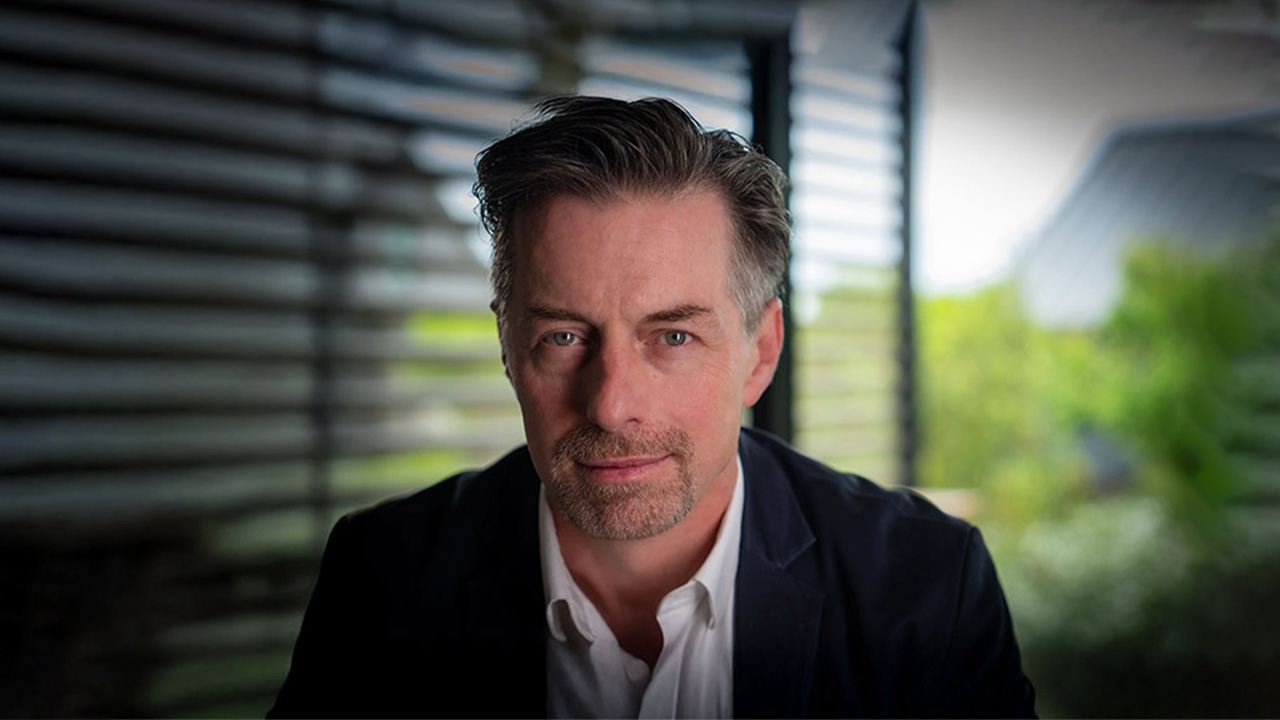
Jason Elrod
Guest Biography
Jason Elrod is the CISO of MultiCare Health System, a published author, and executive advisor with over a decade leading enterprise security in healthcare. Named CISO of the Year 2025 by the ORBIE Awards, he co-authored Cyber CISO Marksmanship and advises organizations at the intersection of AI governance, cybersecurity, and regulated-industry risk. Through Limitless Cyber, he advises PE and VC-backed HealthTech, Digital Health, and MedTech companies on security leadership, board-ready risk strategy, and building executive-grade security programs in high-growth and regulated environments.